

How much do you know about Sodium.om Cyanide?
Sodium cyanide is an important basic chemical raw material, used in basic chemical synthesis, electroplating, metallurgy and organic synthesis, medicine, pesticides, and metal treatment. Complexing agent, masking agent. Refining and electroplating of precious metals such as gold and silver.
【Machinery industry】
It is used as a quenching agent for various steels.
Gold and silver.
Machinery industry
It is used as a quenching agent for various steels.
Electroplating industry
It is the main component for plating copper, silver, cadmium, and zinc. In the electroplating solution, it can reduce the polarization of the anode, ensure the normal dissolution of the anode, stabilize the plating solution, and increase the polarization of the cathode to obtain a uniform coating.
Metallurgical industry】
It is used to extract precious metals such as gold and silver.
It is a raw material for the manufacture of various inorganic cyanides and the generation of hydrocyanic acid. It is also used to manufacture copolymers of organic glass, various synthetic materials, nitrile rubber, and synthetic fibers.
Dye industry】
It is used to manufacture cyanuric chloride (an intermediate for reactive dyes and a raw material for the production of whitening agents). [2]
It is used to manufacture methyl cyanoacetate and diethyl malonate.
Textile Industry】
It is used as a mordant in the textile industry and is also used for liquid carburizing and nitriding of steel.
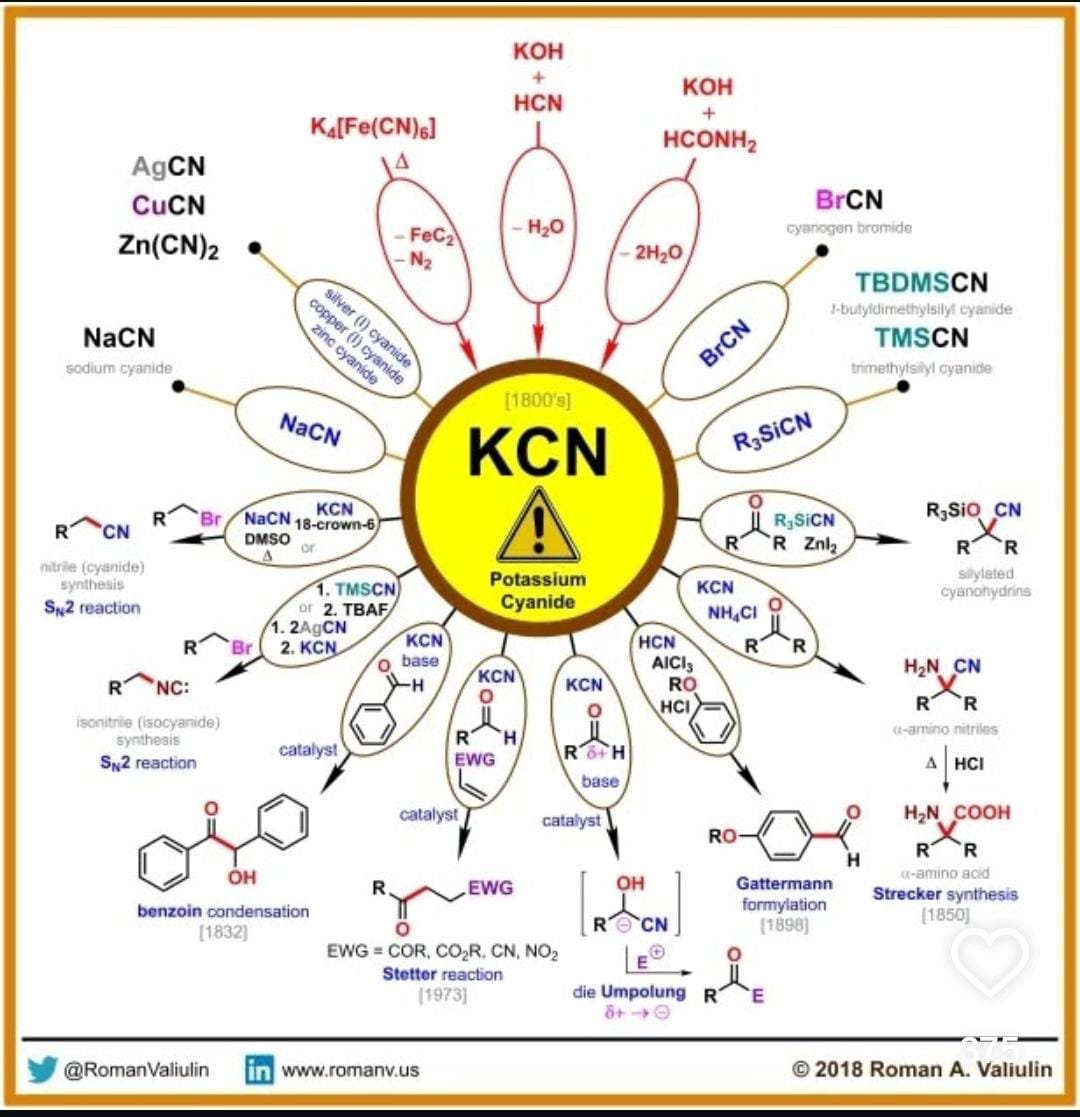
The important inorganic cyanides produced directly from sodium cyanide include sodium cyanide, potassium cyanide, potassium cyanide, zinc cyanide, barium cyanide, cuprous cyanide, sodium thiocyanide, and potassium thiocyanide; organic cyanides include cyanoacetic acid, malononitrile,
The important inorganic cyanides produced directly from sodium cyanide include sodium cyanide, potassium cyanide, zinc cyanide, barium cyanide, cuprous cyanide, sodium thiocyanide, and potassium thiocyanide; organic cyanides include cyanoacetic acid, malononitrile, methionine, benzyl cyanide, and cyanuric chloride. The main products produced by using sodium cyanide to produce hydrogen cyanide include: methyl methacrylate, butyl methacrylate, methacrylic acid, azobisisobutyronitrile, azobisisoheptonitrile, nitrilotriacetic acid, hydroxyacetonitrile, etc.

