HEALTH ANXIETY Do any of these sound like you?

HEALTH ANXIETY. Do any of these sound like you?
Worrying that minor symptoms or body sensations mean you have a serious illness

Frequently searching the internet for causes of symptoms or possible illnesses

Being preoccupied with having or getting a serious disease or health condition

Worrying excessively about a specific medical condition or your risk of developing a medical condition because it runs in your family
Repeatedly checking your body for signs of illness or If you struggle with health anxiety, chances are you’ve experienced at least one of these symptoms before and have felt especially panicked during the pandemic…but here are the facts as a psychologist (disclaimer: this post is NOT meant to diagnose or treat, but merely to inform you more on the specifics from a clinical perspective):

There are two types of health anxieties: Somatic Symptom Disorder and Illness Anxiety Disorder (formally known as hypochondriasis).

Many people with health anxiety fear they are ill or will contract a disease…and this consumes their mind—ALL. THE. TIME.

Many people obsess over bodily functions (such as breathing or heartbeat) or physical discomfort (headaches, stomach aches, lightheadedness).

Some might worry about a specific organ (such as the brain or heart) or be preoccupied by a disease you heard about on the news or at work

People who struggle with health anxiety may also be preoccupied with the belief that they have, or are in danger of contracting, a serious illness.

This fear of having a serious illness can interfere with your daily life and may even lead to unnecessary testing, wasted hours in the doctor’s office, and days consumed by worry.
So how can you begin healing?

Well remember… These health anxieties are a type of anxiety disorder, which is best treated by a licensed psychologist who specializes in anxiety disorders.

Treatment options may include medications and psychotherapy, often in the form of talk therapy, which can help you manage and move past your worries.

If you need help with how to start the therapy process, please don’t hesitate to DM me

Ways to REST when Exhaustion is at a Soul Level

Ways to REST when Exhaustion is at a Soul Level.

Go on a mindful nature walk

Light a candle and watch it flicker

Spend time in prayer or meditation

Do one thing slowly, and with intention

Get a 30-second hug from a safe person

Let your heart soften and have a good cry

Remind yourself, “I don’t have to earn my rest.”

Do less and take one thing off your plate today

Say no to something that just feels like too much

Allow yourself moments of solitude—not isolation

Allow yourself to cancel something you said yes to

Let a safe person see your vulnerability and struggle

Let yourself scroll awhile if it’s restful and not numbing

Do one thing for joy—not achievement or productivity

Lower the bar today—Let “good enough” be good enough

Unfollow anyone that makes you feel like you aren’t enough

Slow down—physically, mentally, relationally, and spiritually

There’s a kind of exhaustion that sleep just doesn’t fix.

The kind that comes from living in a chronic state of nervous system dysregulation and having an anxious brain that never shuts off.

From holding it all together when you’re unraveling inside.

It’s not just physical—it’s emotional, mental, and spiritual too.

And it asks for a different kind of rest. Not just naps and early bedtimes, but boundaries, softness, slowness, and being held—even if only by yourself.

Here are some ways to get the rest your soul needs when your fatigue goes beyond the need for sleep.

Which is your favorite? Let’s talk about it in the comments!

Need some uplifting reminders that encourage and inspire, even on the draining days? Get my new

FREE PDF, 50 Favorite Anxiety Affirmations sent right to your inbox by commenting 50 AFFIRMATIONS below!

Find this helpful? LIKE, SAVE, and SHARE with a friend or your community.

Anxiety in your 20’s

Anxiety in your 20’s.

I’ve been loving this series on what anxiety looks like in different decades, so today I want to share a little about my 20s.

Back then, I didn’t even know I had anxiety…I just knew I felt uncomfortable in my own skin. My self-esteem was low, and instead of coping in healthy ways, I numbed with partying, drinking, and unhealthy habits.

I buried emotions and old traumas because I didn’t know how else to deal. It wasn’t until my mid-30s that I finally started to feel at home in my own skin. Here are some tools I wish I had made more of a priority in my 20s.

Daily Tools for Anxiety in Your 20s

Get honest about who you spend your time with. Notice how friends make you feel-do they lift you

up or drain you?

Cut down on alcohol + numbing habits. They may give short relief but make anxiety worse long-term.

Start therapy if you can. Having a safe space to process emotions can change everything.

Create a mental health toolkit. Build coping habits like journaling, grounding, or breathwork.

Practice saying ‘no’ once a week to protect your peace and energy.

Stay single long enough to learn to love yourself before settling for less.

Try living alone or traveling solo. It builds independence and self-trust.

Anchor your day with one ritual (walk, playlist, or morning journaling) to feel grounded.

Your 20s don’t have to be about numbing or pretending. You’re allowed to choose healing, even if you don’t have it all figured out yet.

“Who am I supposed to be by now?”

“Everyone else has a career… what if I’m already behind?”

“What if I picked the wrong major/job and ruined my future?”

“They’re getting engaged, buying houses, traveling-and I can’t even pay rent.”

“Shouldn’t I have it all figured out by 25?”

“What if I fail before I even start?”

“If I say no, they’ll stop inviting me. But I’m exhausted.”

“Did I make the wrong choice moving here? Choosing this partner? Taking this job?”

“I should feel independent by now, but I can’t even afford it.”

“Why does every big life change feel like I’m about to fall apart?”

THE WORST THINGS ABOUT HAVING ANXIETY

THE WORST THINGS ABOUT HAVING ANXIETY

Believing you’re a burden to everyone.

Cancelling plans last minute.

Having an outburst over something that others may consider not a big deal.

Frequent crying and mood swings.

Isolating yourself from others.

Constantly waiting for something bad to happen.

Feeling unwell physically most of the time.

Inability to forgive yourself for making mistakes.

We all know there are some horrible things about having anxiety, like the things in this post. However, anxiety can also do us some good at times. It can heighten our awareness, motivate us to prepare for challenges, and even help us recognize and avoid potential dangers.

* If your anxiety is doing more harm than good, here are some tips to jumpstart your healing journey

1 Challenge negative thoughts and replace them with more realistic ones.

Often, those with anxiety tend to catastrophize and imagine worst-case scenarios. By consciously questioning these thoughts and evaluating the evidence for their validity, you can reduce the power they hold over you.

2 Do the work.

Taking care of your physical and mental well-being can significantly impact your anxiety levels. This includes adopting healthy lifestyle habits such as regular exercise, getting enough sleep, and eating a balanced diet. Also engaging in activities that bring you joy and relaxation, such as practicing , painting, or spending time in nature, can help Alice anxiety and promote a sense of calmness.

3 Seek support from a mental health professional. They can provide guidance, tools, and techniques tailored to your specific needs. Therapy can help you explore the root causes of your anxiety, develop coping mechanisms, and enhance your overall resilience in the face of stress.

* Remember, anxiety is a common human experience, and you are not alone in your struggles. The journey to anxiety healing may take time and effort, but with persistence and self-compassion, you can find relief and begin to fully enjoy life again.

QUICK DISTRACTION TECHNIQUES IF YOU’RE STUCK IN FIGHT OR FLIGHT

QUICK DISTRACTION TECHNIQUES IF YOU’RE STUCK IN FIGHT OR FLIGHT.

Say the alphabet backward.

2. Name all the ice cream flavors that you can think of.

3. Name as many cities around the world as you can.

4. Start with ‘A’ and name a fruit that begins with each letter of the alphabet.

5. Name all the candy brand names that come to mind.

6. Play the “guess their occupation” game. Look at people around you and try to guess their jobs or occupations, or where they are going.

7. Think of how many of these you can name: movies, cities, songs, sodas, breakfast foods, furniture, etc.

Distraction gets a bad rep-but it can actually be a powerful healing tool when you’re stuck in fight-or-flight.

When your nervous system is in overdrive-during a panic attack or when you’re outside your window of tolerance-simple distraction techniques (like naming colors around you, moving your body, or holding ice) can help bring you back into the present and begin to activate your parasympathetic nervous system (aka your calm response).
QUICK DISTRACTION TECHNIQUES IF YOU’RE STUCK IN FIGHT OR FLIGHT.

But here’s the key: distraction is a tool, not a solution.

It’s not meant to control or avoid your emotions long-term. And if used too often, it can become a safety behavior that reinforces fear rather than helps you process it.

The goal is never to rely on just one thing to calm you down-but to build a well-rounded healing toolkit that includes regulation, reflection, and support.

Comment “heal my anxiety” and I’ll send you the link to a full list of distraction techniques that can help when you’re in a spiral.

Save this post to come back to when you feel overwhelmed-and remember: healing happens in tiny, intentional steps.

The polyvagal ladder understanding your nervous system states

understanding your nervous system states . Your nervous system isn’t broken when you feel anxious, overwhelmed, or shut down. It’s responding exactly as it was designed to based on what it perceives as safe or threatening.

The Polyvagal Ladder helps us understand these responses as adaptive rather than pathological. Each state served a purpose in keeping our ancestors alive, and each state still serves a purpose today.

What I find most helpful about this framework is that it removes shame from our nervous system responses. When you’re in fight/flight, you’re not being dramatic. When you’re in shutdown, you’re not being lazy. Your nervous system is doing its job.

Understanding where you are on the ladder gives you choices about how to respond. Sometimes we need the energy of sympathetic activation. Sometimes we need the rest of dorsal vagal. And sometimes we need the connection of ventral vagal.

The magic happens when we can recognise our state, honour what it’s trying to do for us, and then gently guide ourselves toward the state that serves us best in the moment.

Building this awareness takes practice, but it’s one of the most powerful tools I know for working with anxiety, overwhelm, and disconnection.

Which state do you find yourself in most often? What helps you move between states?

Your nervous system operates like a ladder with three main states

Developed by Dr. Stephen Porges, Polyvagal Theory shows how your autonomic nervous system responds to safety and threat.

Understanding these states helps you recognise where you are and how to gently shift when needed.

Ventral Vagal – top of ladder

Ventral Vagal (safe & social): This is your ‘optimal’ state for connection and daily life.

What it feels like:

Calm but alert

Able to think clearly

Connected to others

Curious and open

Digestive system working well

Can handle stress without overwhelm

You might say: ‘I feel grounded and present.’

Sympathetic – middle of ladder

Sympathetic (fight or flight): Your mobilisation system activated for action.

What it feels like:

Heart racing or restless energy

Racing thoughts

Hypervigilant and scanning for threats

Difficulty concentrating

Feeling ‘wired but tired’

Digestive issues

You might say: ‘I feel on edge and can’t slow down.’

Dorsal Vagal – bottom of ladder

Dorsal Vagal (shutdown): Your system’s protective disconnection response.

What it feels like:

Numb or emotionally flat

Foggy thinking

Extreme fatigue

Feeling disconnected from others

Hopeless or empty

Wanting to isolate

You might say: ‘I feel like I’m watching my life from outside.’

Moving between states:

Moving up the ladder (toward safety):

From dorsal to sympathetic: gentle movement, hot shower/bath or sauna, calling a friend

From sympathetic to ventral vagal: deep breathing, humming, progressive muscle relaxation, grounding techniques, cold water on face

The key: small, gentle shifts work better than forcing dramatic changes.

Self-assessment tool:

Quick check-in: Where am I right now?

Energy level: Flat and low / Anxious and high / Calm and steady

Thoughts: Foggy/blank / Racing/worried

/ Clear and focused

Social desire: Want to hide / Feel

defensive / Want connection

Body: Heavy/numb/ Tense/activated /Relaxed/grounded

Notice without judgment – all states serve a purpose.

Working with your states:

Practical applications:

Track patterns: notice your typical triggers and times

Name your state: ‘I’m in sympathetic activation right now’

Choose interventions: match techniques to your current state

Practice when calm: build regulation skills in ventral vagal

Be patient: state changes take time

Remember: The goal isn’t to stay in ventral vagal 24/7 – it’s to have flexibility.

References

Porges, S. W. (2011). The polyvagal theory: Neurophysiological foundations of emotions, attachment, communication, and self-regulation. Norton.

Dana, D. (2018). The polyvagal theory in therapy: Engaging the rhythm of regulation. Norton.

Dana, D. (2020). Anchored: How to befriend your nervous system using polyvagal theory. Sounds True.

Porges, S. W. (2022). Polyvagal safety: Attachment, communication, self-regulation. Norton.

Share this post with someone who may find it helpful

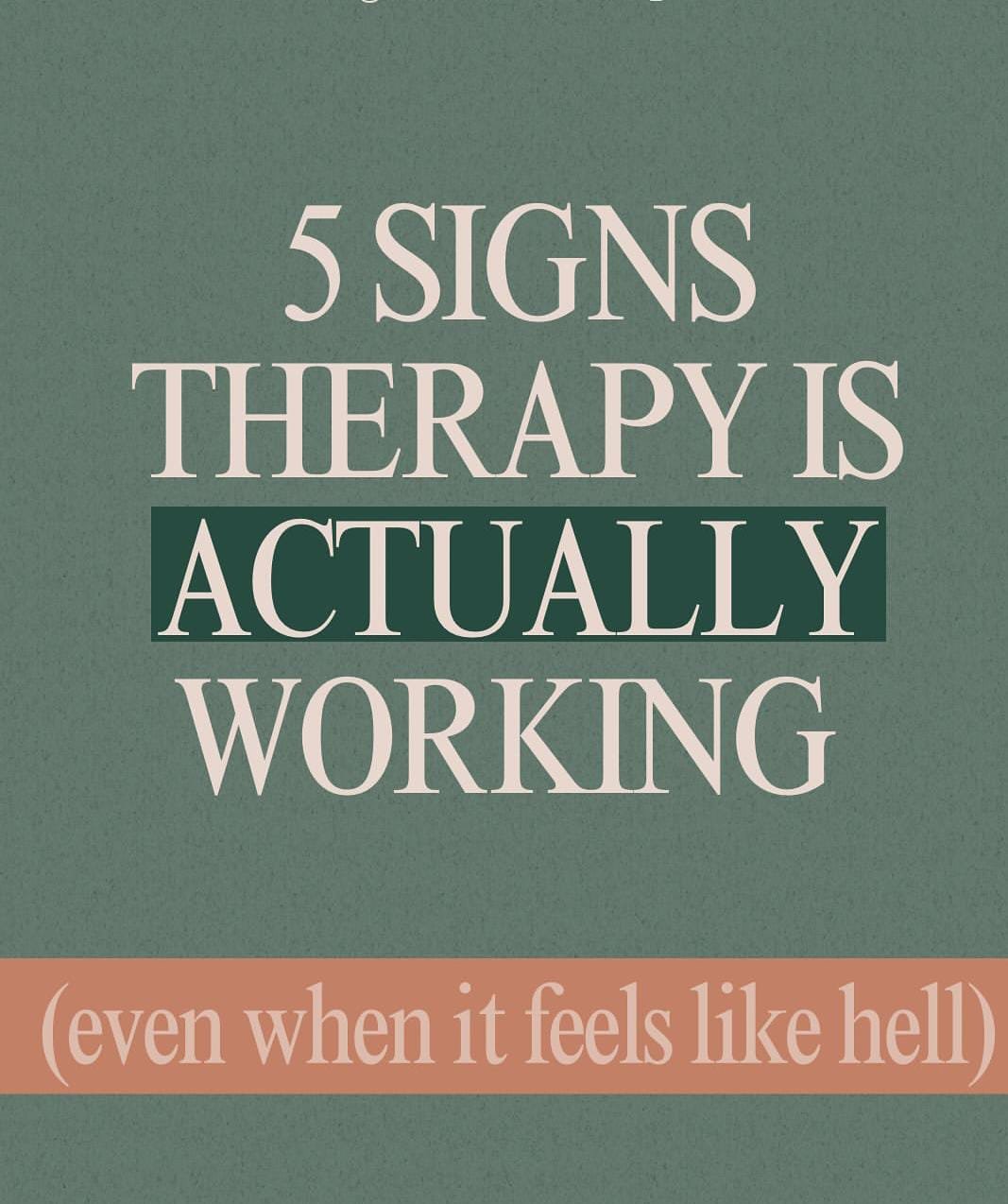
5 SIGNS THERAPY IS ACTUALLY WORKING(even when it feels like hell)

5 SIGNS THERAPY IS ACTUALLY WORKIN :

When you’ve spent years in survival mode, your nervous system files emotions away for “later” because you didn’t have the safety to process them. Therapy creates that safety. Now “later” is happening, and it can feel overwhelming.

Research shows that successful emotion regulation literally rewires the connections between your amygdala (fear center) and prefrontal cortex (rational brain). What feels like chaos is actually your brain forming new, healthier neural pathways. The crying, the anger, the questioning—all aren’t signs of regression. They’re signs your nervous system finally trusts you enough to let you feel.

Real healing isn’t about feeling good faster. It’s about finally having space for all the emotions you couldn’t afford to feel before. When clients tell me they’re “falling apart” in therapy, I usually celebrate internally. Because falling apart means you’re finally safe enough to stop holding it all together

Want more insights into what healing actually looks like? I break down these therapy myths and realities over on my Substack – link in bio.

5 SIGNS THERAPY IS ACTUALLY WORKING(even when it feels like hell)

1) You’re crying more than usual.
Your body is finally releasing what it’s been holding. Those tears aren’t weakness—they’re decades of unfelt emotions finding their way out.

2) You’re feeling angry for the first time (or more intensely)
That rage bubbling up was always there, buried under “I’m fine” and people-pleasing. Now your nervous system is safe enough to let you feel what you actually feel about what you’ve experienced.

3) You’re setting boundaries (and people are mad)
The same people who benefited from your lack of boundaries will be the first to tell you therapy is “changing you.”
Good. That was the point.

4) You feel like you’re falling apart
It may feel like you are coming undone, but that means you’re finally safe enough to feel everything you’ve been carrying. You are learning the difference between those survival responses that kept you going, and what was really YOU underneath all of that.

5) Nothing feels familiar anymore
Your old responses don’t fit. The things you used to do automatically now feel forced. This identity confusion means you’re finally separating who you actually are from who trauma taughy t you to be. You’re discovering which parts were survival and which parts  are genuinely you. That identity confusion means you’re outgrowing who you had to be to survive.

Healing looks like chaos before it looks like peace.

If therapy feels harder than expected, you’re probably doing the deep work that actually creates lasting change.

SYMPTOMS OF ANXIETY THAT MAY ALSO BE LINKED TO DEPRESSION

SYMPTOMS OF ANXIETY.  Here’s the thing…anxiety and depression may look different on the outside, but deep down, they’re more connected than you might think. I like to describe them as siblings—each with their own personality, but often overlapping in ways that can make it hard to tell them apart.

Anxiety is typically fast-paced, filled with racing thoughts, restlessness, and a constant sense of urgency.

Depression, on the other hand, can feel heavy, slow, and draining—like carrying around an invisible weight.
But here’s the tricky part: many symptoms

can show up in both anxiety and depression.

Feeling exhausted? Trouble concentrating? A sense of hopelessness? Overthinking?

Avoiding things you once enjoyed? These can all stem from either (or both) anxiety and depression.

If you identify with any of these, know that you’re not alone. Here are a few things that might help:

Check in with yourself – Are your thoughts more fear-based (anxiety) or more shut down and detached (depression)?
Recognizing the difference can help you find the right support.

Try movement – Even a short walk can help regulate both anxious energy and depressive fatigue.

Focus on small wins – Whether it’s getting

out of bed, drinking water, or texting a friend, small steps matter.

Talk to someone – A therapist, trusted friend, or support group can help you process what you’re experiencing and guide you toward healing.
Anxiety and depression may have different personalities, but both deserve compassion and support. You’re not alone in this.

Do you ever struggle to tell the difference between anxiety and depression? Let me know in the comments!

TRAUMA AND HEALING

TRAUMA AND HEALING:

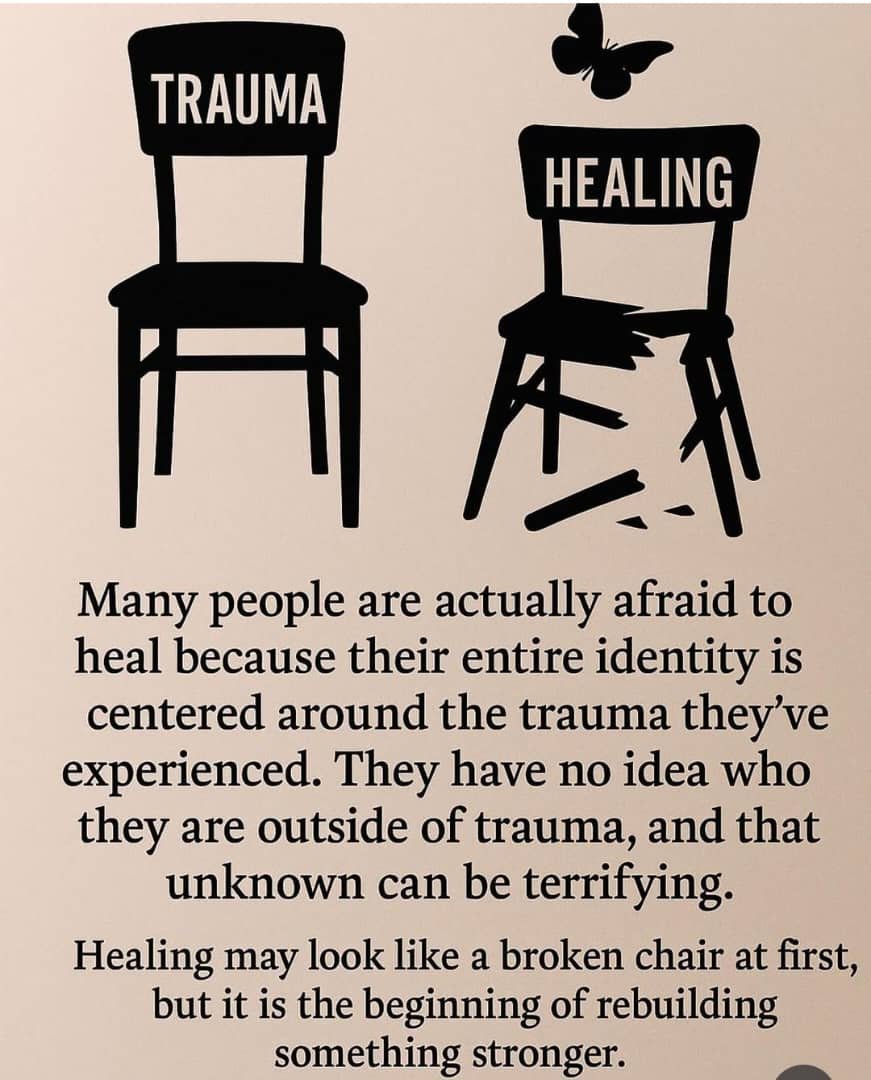
Many people are actually afraid to heal because their entire identity is centered around the trauma they’ve experienced. They have no idea who they are outside of trauma, and that unknown can be terrifying.

Healing may look like a broken chair at first, but it is the beginning of rebuilding something stronger.

Healing isn’t always beautiful at first.

For many survivors, trauma feels like the “safe” chair – solid, familiar, and predictable – while healing feels broken, uncertain, even terrifying. But here’s the truth: what looks “broken” in healing is actually the beginning of rebuilding something stronger, step by step. 6

Trauma healing is not one-size-fits-all. Different therapy approaches can support your journey depending on your needs:

EMDR (Eye Movement Desensitization and Reprocessing): Helps reprocess traumatic memories so they lose their overwhelming power.

Somatic Experiencing & Body-Based Therapies: Release trauma stored in the body, regulate the nervous system, and restore safety.

CBT (Cognitive Behavioral Therapy): Shifts negative thought patterns caused by trauma into healthier perspectives.

DBT (Dialectical Behavior Therapy): Builds emotional regulation, mindfulness, and coping skills.

IFS (Internal Family Systems): Heals inner parts (like the wounded child or protector) with compassion and self-leadership.

Trauma-Informed Talk Therapy: Creates a safe space to process experiences without re-traumatization.

Group Therapy & Peer Support: Reminds you that you are not alone – community is healing.

Healing may feel uncertain, but every step you take is proof of your courage. You are not broken. You are rebuilding. And you are not alone.

Add to cart